



In shrimp farming, food accounts for over 50% of the total cost of production and plays a critical role in economic efficiency. A strategy proper nutrition not only helps shrimp increase mature quick, healthy, meat, solid, standard, commercial, but also reduce wastage, limit the environmental pollution and disease prevention. So the food not only is the biggest expense that was factors that decide the success or failure of crop.
The type of food and how to use
The food used in shrimp farming can be divided into three main groups.
- Natural food
Natural food includes: algae, rotifers, daphnia and other benthic organisms such as worms or crustaceans, small. This is a significant source of nutrition in the early stages when new shrimp stocking, provide protein, amino acids and essential fats. Farmers often focus on the cause watercolor and additional microbial products used to develop populations of algae and beneficial microorganisms, thereby maintaining natural food sources abundant.
- Food industry
This is the food source in the model adopted intensive and super intensive. They are produced according to the formula balance to meet the needs of the shrimp in each stage. When shrimp was little food in the form of powder or flakes smooth with high protein content. When the shrimp are larger pellet size fit and protein content was adjusted downward. The biggest advantage of the food industry is convenience, control, good quality food and limit environmental pollution, however, need to pay attention to choose the product from the reputable manufacturer.
- Homemade food
In addition, some farmers still use the homemade food from local ingredients such as fish magazine, snails, rice bran or soy flour. Food is low-cost, easy to make, but potential risks of imbalanced nutrition, polluting the water and bring the pathogen into the pond. Therefore, homemade food should be used only in the additional time should be dealt with as thoroughly cooked, dried, or fermented to ensure safety.
Management principles and techniques for food
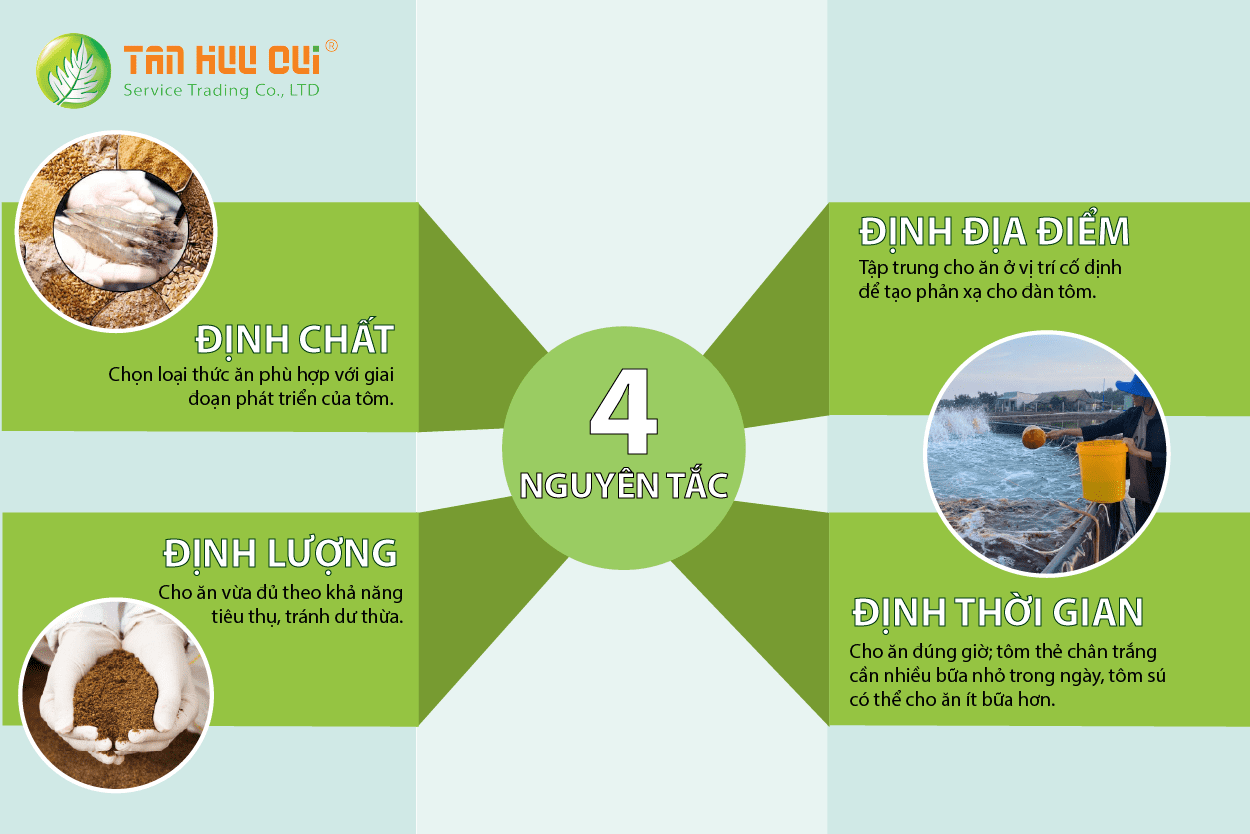
Management of feed efficiency is wrapped up in 4 basic principles:
- The high: select the type of food appropriate to the developmental stage of the shrimp.
- Quantitative: to eat enough, according to the ability to consume, avoid excess.
- Location: concentrate feeding in fixed position to create reflections for shrimp.
- Time: feeding punctuality; white shrimp need many small meals during the day, shrimp can be fed less frequently.
4 basic principles food management efficiency In the new phase drop (7-10 days):
- Use the feed to a fine powder, air, water and mustard are, condenser fan water when feeding to limit losses.
- Initial weight: 1-2 kg/100.000 postlarvae/day, increased gradually according to the needs.
When the shrimp are larger:
- Gradually shifted to the pellet size larger, mix alternating with the old type to shrimp adapted.
- Adjust the ration based on the test results ready to eat.
- Can supplements probiotics, digestive enzymes, vitamins and minerals to enhance intestinal health and ability to absorb.
Today, accompanying with the progress of science and technology, Vietnam's seafood industry always strives to improve processes, raise and systematized management process. Aims to sustainable aquaculture ensure both animal performance, just environmentally friendly, but optimal is the cost of production.
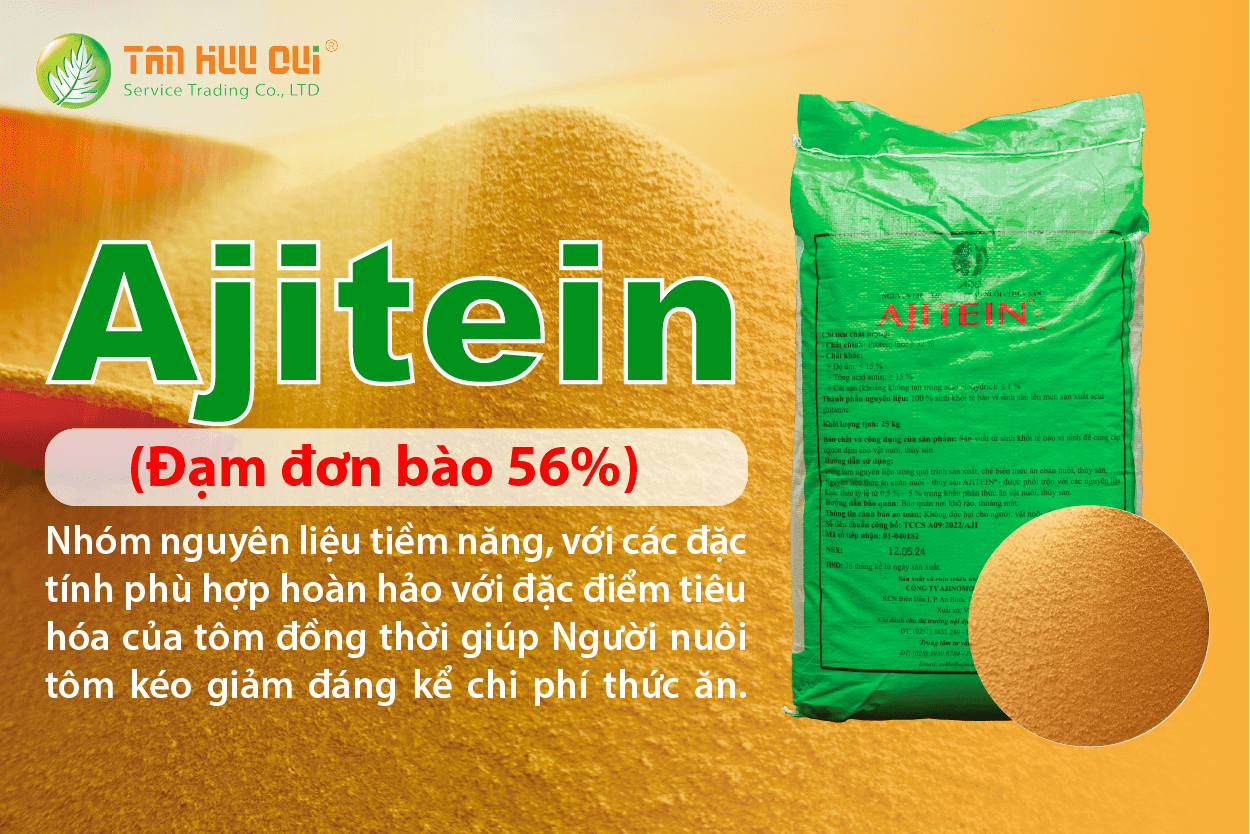
Use the source material provides protein replacement is 1 in the effective direction, helping to reduce dependence on the imports, limiting the risk of disease but still ensure component nutrients. Protein single cell is a group of raw potential, with the characteristics fit perfectly with the characteristics of digestion of shrimp at the same time help The shrimp drag significantly reduced the cost of food. (See more at Tan Useful and Precious)
Conclusion
Nutritional management in shrimp aquaculture is not only technical, but also the the art of balance between cost, efficiency and sustainability. When the pet master the principles, choosing the right type of food and applied flexibly according to actual conditions, brunette, shrimp will grow healthy, evenly, reducing risk for disease and environmental pollution. This is a foundation to move towards a shrimp industry effective, safe, and sustainable development in the future.